There is a moment when a threat is detected.
An alert appears, logs start to accumulate, and it feels like things are under control.
But in reality, that is exactly where the gap begins.
Because between detection and action, several steps still need to happen.
Someone has to notice the alert, understand its meaning, decide how urgent it is, gather context, validate it, and only then take action.
In the meantime, nothing actually stops.
If it is phishing, someone may have already clicked.
If it is unauthorized access, it may have already been established.
If it is a sophisticated attacker, they are not waiting for the organization to catch up – they are already moving forward.
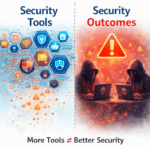
The problem is not detection.
Most organizations already have enough tools to detect threats.
The problem is what happens immediately after.
Because the later the response begins, the faster, more pressured, and less accurate it becomes.
And that small gap – just a few minutes between alert and action – is exactly where risks turn into real incidents.
In the end, the question is not just whether a threat was detected, but whether action was taken before it had the chance to move forward.