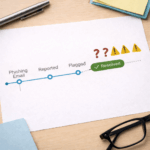
In most organizations, phishing is still treated as a point-in-time incident: a malicious message gets through, a user clicks, a tool raises an alert, and the case is considered closed. In reality, this is the moment when the real risk only begins.
Once credentials are exposed or a malicious link is opened, a quiet window is created in which the attacker can operate with little resistance. Access to additional accounts, abuse of existing permissions, lateral movement across cloud systems, and exploitation of channels that are not always equally monitored.
The most significant damage is not caused by the email itself, but by what happens afterward. Password reuse, logins from personal devices, and access to business services via mobile phones or collaboration tools can quickly turn a seemingly minor incident into a widespread problem.
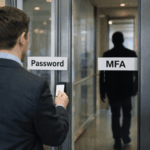
In many cases, security stacks detect the phishing attempt but fail to track what happens to the user and their accounts afterward. This is where the gap appears between alerting and actual prevention, especially when the attack continues across multiple channels and requires continuous protection of the user and the environment they operate in.
Phishing is almost always the entry point. The real damage starts after the click, and it is defined by an organization’s ability to stop the attack before it escalates into an operational, financial, or legal incident.