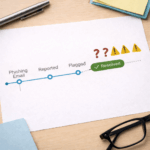
The moment an employee clicks a phishing link is not the beginning of the incident – it is the beginning of the pressure.
From that point on, security teams shift into immediate response mode, often before there is a clear picture of what actually happened. It is not yet known whether credentials were entered, code was executed, or whether the click created an entry point already being exploited in the background.
Time becomes the most critical factor.
Decisions must be made quickly:
- Is this an isolated incident or something that is already spreading?
- Which systems could be affected?
- Should users, sessions, or devices be disconnected?
- Which security controls should be activated, and when?
The problem is that these decisions are almost always made under pressure, with partial information, and with a very real concern that the clock is already ticking somewhere else in the environment.
This is where the real risk emerges.
Not only from what the attacker is doing – but from what we might miss or do too quickly.
Responding to phishing after the click is a race in which it is unclear who is already ahead. Even strong tools struggle to provide full certainty in real time, forcing teams to estimate potential impact instead of acting with confidence.
Detecting phishing before the click changes the entire dynamic.
The incident is stopped before containment, investigation, and urgency are required. Teams gain time, decisions are more deliberate, and responses are driven by context rather than emergency.
Early prevention does not only reduce technical damage.
It prevents the organization from chasing an incident that may already be out of control.