-

BEC is Not an Email Attack. It is an Identity Attack
In most organizations, Business Email Compromise is still viewed as just another type of phishing attack aimed at sending a convincing email. In practice, this is only a superficial view. BEC is first and foremost an attack on digital identity. The attacker uses email only as an entry point. The real objective is to obtain…
-

Telecom and Cybersecurity: A Strategic Partnership
In a world where phishing attacks, fraud, and impersonation increasingly originate from mobile devices and communication networks, telecom companies have become the first line of defense for both users and organizations. But a first line of defense is not enough. Telecom providers have deep visibility into network traffic, usage patterns, and attack entry points. Cybersecurity…
-
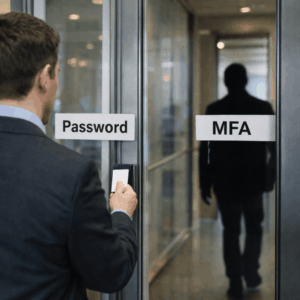
When Multi-Factor Authentication is No Longer Enough
For years, multi-factor authentication has been considered the most effective layer of defense against account takeover. Organizations invested heavily in deploying it, users got used to approving an extra code, and a sense of security emerged that the problem was solved. In practice, attackers adapted long ago. Today’s advanced attacks do not try to break…
-

The Real Damage Starts After the Phishing Email
In most organizations, phishing is still treated as a point-in-time incident: a malicious message gets through, a user clicks, a tool raises an alert, and the case is considered closed. In reality, this is the moment when the real risk only begins. Once credentials are exposed or a malicious link is opened, a quiet window…
-
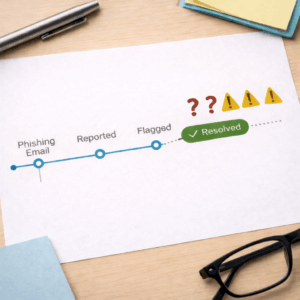
What a Real Phishing Incident Looks Like in Practice
One of the most interesting things about real-world security incidents is that they almost never look the way people imagine. No alarms, no systems going down, no internal headlines. In one customer case, it started with a completely standard phishing message. The user reported it, the email was flagged, and from the organization’s perspective, the…
-

Post-Click Panic vs Pre-Click Control
The moment an employee clicks a phishing link is not the beginning of the incident – it is the beginning of the pressure. From that point on, security teams shift into immediate response mode, often before there is a clear picture of what actually happened. It is not yet known whether credentials were entered, code…
-

The Illusion of Control in Modern Security Stacks
Most organizations today invest in an impressive security stack. More tools, more dashboards, more alerts. On paper, everything looks covered. In reality, this sense of control does not always survive contact with real-world attacks. The problem does not start with technology, but with what happens between tools. Phishing is detected in one system, credential use…
-

Sharp Increase in Valentine’s Day Phishing and Scam Activity
Our research team, Team51, has identified a sharp rise in seasonal consumer scam activity ahead of Valentine’s Day. Starting in mid January, we observed a 43% surge in the registration of love and romance related domains, along with an additional year over year increase of approximately 17%. Our findings show that the most common scam…